The extrovert-introvert spectrum is just one of the “Big Five” traits that researchers use to study personality. The five traits are:extroversion
openness to experience
conscientiousness
agreeableness
bneuroticism
the typical steriotype of the personalities are introverts tend to like quite spaces such as libraries, cafes, their home, and ect. meanwhile extroverts love loud spaces like parties, raves, and ect. but this isn't always the case. It really depends on the type of person. im an extrovert but it dosen't mean i never want to be alone, some introverts don't like to talk but they like the comfort of their friends.

Need quiet to concentrate.
Are reflective.
How to tell if you’re an introvert or extrovertAre self-aware.
Take time making decisions.
Feel comfortable being alone.
Don't like group work.
Feel tired after being in a crowd.
Excited and Have Lots of Energy.
Happy to Talk and Comfortable Surrounded by Many People.
Optimistic and Confident.
Actively Participate in Various Activities
Easy to Adapt.
other details= click here

harvard studies say ; It’s well-known that engaging in extroverted activities such as networking and public speaking can help people advance their careers. Research has further suggested that in some cases, even naturally introverted people may be energized and feel better in the moment when engaging in these behaviors. However, studies have also shown that acting more extroverted than you are can take a substantial mental toll in the longer-term, leading to lower energy levels and potentially cancelling out the personal and professional benefits. As such, the authors argue that naturally more-introverted people should carefully weigh the benefits of putting on an extroverted face, and should make sure to give themselves time to recharge if and when they do decide to participate in extroverted activities. Extroversion is a personality trait typically characterized by outgoingness, high energy, and/or talkativeness. In general, the term refers to a state of being where someone “recharges,” or draws energy, from being with other people; the opposite—drawing energy from being alone—is known as introversion.
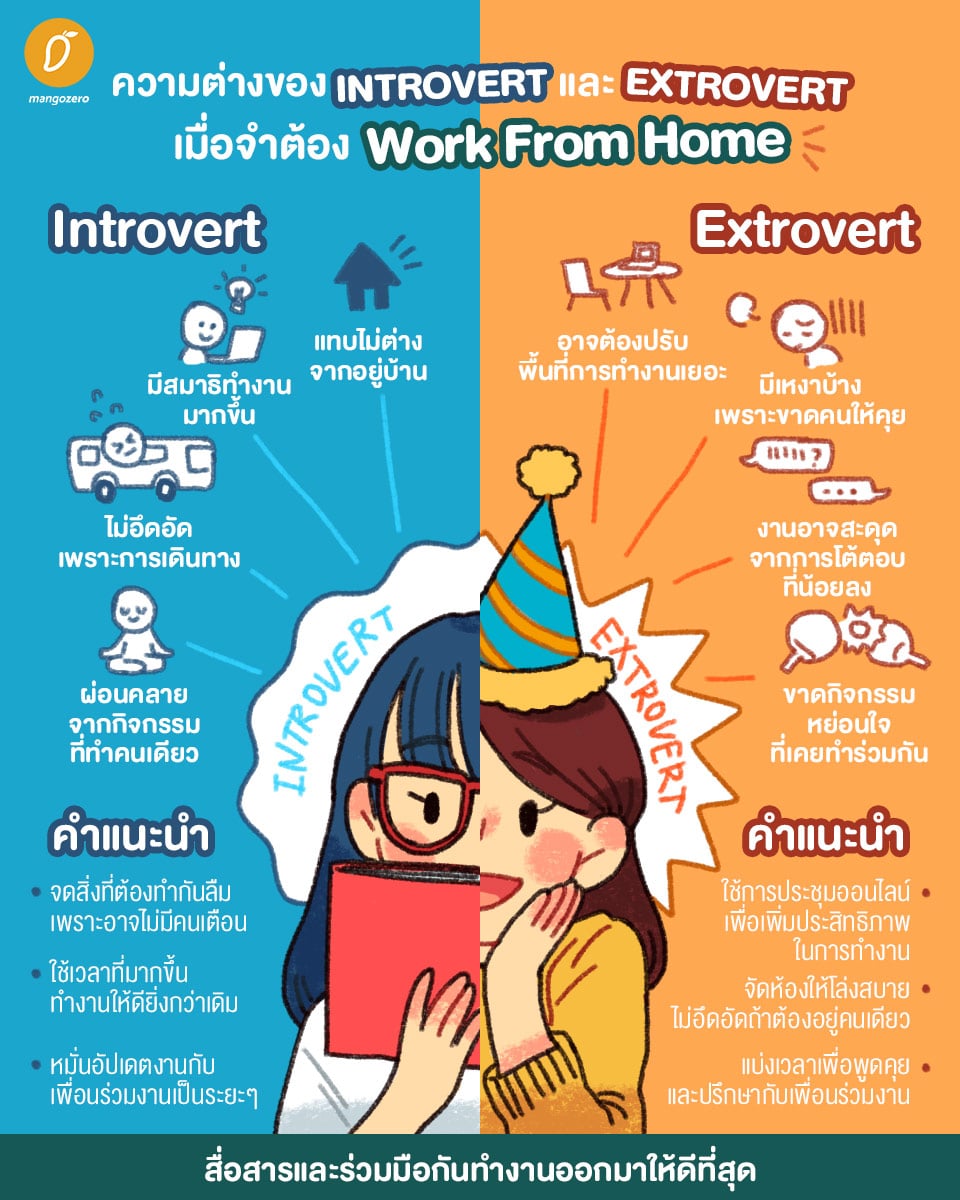
How to tell if you’re an introvert or extrovert “When we think about introverts vs. extroverts, it’s not all that clear-cut in terms of if you’re one or the other,” says Dr. Tworek. “You might have traits of one. But that doesn’t mean all these traits are going to fully apply to you.” For example, you may have certain qualities at work that are more extroverted, like leading meetings and speaking up, and in your personal life, you might be more introverted and like to spend time alone to recharge and have a close-knit group of friends. If you have a mix of traits, you could be an ambivert, somewhere in between being an introvert or extrovert. You may excel in social settings and spending time alone. You may also have good active listening skills — engaging in conversation with others while being able to provide a considerate reply. So, how can you figure out where you fall on the personality spectrum? While there are plenty of online tests that use a series of questions to determine your personality type, Dr. Tworek says the best place to start is with yourself.
“A really good way to tell is just to do a little bit of introspection,” she suggests. “Start by reflecting on your own experiences and when you’re most comfortable. There’s no right or wrong answer. It’s really about your personal preference, what feels best for you.” And if you’re having a tough time figuring it out, you can ask those close to you for their observations. “You can ask them if you’re the type of person who tends to speak up,” Dr. Tworek says. “Feedback from someone you trust and feel comfortable with can give you some insight.”
“There are positive qualities that come along with both introverts and extroverts, as well as drawbacks,” states Dr. Tworek. For example, if you tend to blurt out your opinion before getting a chance to think about it or you rarely speak up with your opinion, you can work on changing how you respond. “If you typically speak up quickly, take a few moments to formulate your opinion in your head before saying it aloud in a meeting,” advises Dr. Tworek. “And if you’re more likely to stay quiet, try writing down your thoughts in a notebook and then saying it out loud to those around you.” If you’re not that outgoing in social settings, work on making small talk. Or if you’re always on the go, try to spend an afternoon reading a book and recharging. Even practicing meditation can help whether you view yourself as an introvert or extrovert. Those moments of silence can lead to reflection and a deeper awareness and even help you learn tools to combat anxiety in social settings. “It’s all about bringing awareness to those certain traits that you want to change,” says Dr. Tworek. “We can actively work on the positive traits of each personality type to bring out the best of both worlds.”